

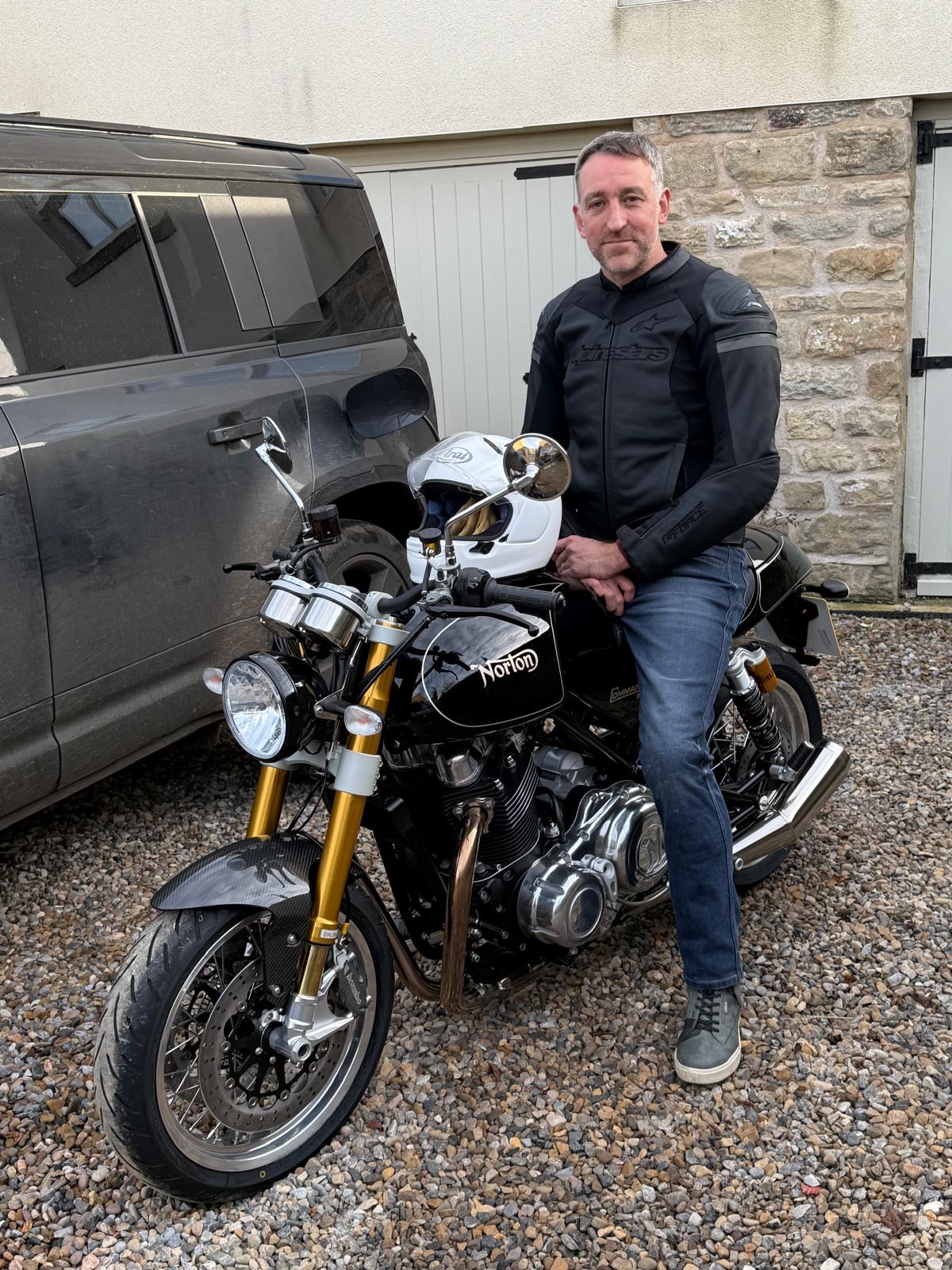
Forgive my second noddy question. My bike arrived on Saturday morning, the weather around me was "ok" this weekend but not great, the roads were wet and a bit muddy, however.....I just couldn't wait. I've done about 80 miles of running in, keeping it below 3.5k rpm as per the advice. Anyway, 2 hours in the garage with muc off waterless wash has got things reasonably clean again but not as new. My plan is to get a coat of ACF50 on there as per the advice on this forum before my next ride.
2 hours with a cloth was helpful in some ways, I found my way around the bike but I can't imagine ever being able to get the thing spotless without a jet wash, I simply can't get to some parts, even with a small detailing brush. Am I ok to use a jet wash carefully? The only thing stopping me was some of the wiring around the engine which has a few mm of exposed wire in places before it gets to the plug / connection box. I'm assuming it's all waterproof for obvious reasons.
Any advice greatly received. Thank you.
Don't use a jet washer. They…
- Log in to post comments
Mudguard Extension / Mudflap
Definitely source a mudguard extension and/ or mudflap.
I've even fitted a mudflap in front of the rear wheel. They save a massive amount of cleaning on the 1966 N 650SS. People keep asking how much time I spend cleaning & polishing. Answer: very little time.
Fitted an aftermarket front mudguard extension to a Kaw' GPZ900R years ago. Excellent.
With everyone else on pressure washing; don't!
- Log in to post comments
Not much to add….
Stan has you on the right path. Make sure you remove the mud off residue also as that can stain bare metal. If you have a compressor a light blast in crevices, cap heads and screw slots helps.
And when you put it away, keep it in a warm dry environment. To assist evaporation don't cover it for a few days, leave air circulate. When your satisfied its dry cover to protect from dust with a cotton (bed) sheet first then a proprietary cover.
Nice looking machine :-)
- Log in to post comments
I use a leaf blower to dry…
I use a leaf blower to dry the bike off afterwards, additionally, as we have fairly hard water, I always give a final wipe dry as suggested. Then the bike does not need much polishing.
- Log in to post comments
don't use warm water
and don't use warm water. Worsens the effect of the salt - counter intuitive I know - but that was in a KTM manual.
Plus one for a leaf blower
Anti corroision I use XCP clear - came out the winner in some comparison tests.
BTW - great looking bike - enjoy!
- Log in to post comments
Triumph...
... recommend covering the handle bar controls/switchgear with plastic bags if you use a pressure washer. I took this to mean avoid using a pressure washer, never found it necessary. Mains pressure does the job.
- Log in to post comments
Jet washers
My last job was with the Forestry Commision maintaining plant and machinery.We used jet washers of course but took great care not to go anywhere near electrics or other delicate items .when I clean my bikes (not Often) its all by hand. There was one local who wold dismantle his bike to clean it every weekend but his knick name was Mad bob
- Log in to post comments
I don't know about ACF50,…
I don't know about ACF50, but I used ATF-something that was especially for riding through road salt. It did its job very well, but was really hard to get off again after winter. Left a sticky film. The only thing that helped was dedicated motorbike cleaner, like Muc Off.
Warm water dissolves the salt, while cold water doesn't. That 's why you shouldn't use warm water. Just cold water from a hose.
A jet washer is obviously dangerous near electrics, but also near bearings, pivot points, et cetera.
Waterless wash products can be impressively useful, I found in the past, but remember that mud is still sand, which you'll be rubbing dry. My feeling is that the silicone or whatever is in there, hides the scratches. But I can definitely be wrong.
For me, a good motorcycle cleaner that you spray on, leave for a few minutes and then hose off is still the best way. Drying with a leaf blower if you wish, but I prefer a good ride. And, as said above, don't leave the stuff on for too long, as it can stain your metal. Though a bit of WD40 or similar can get rid of that. That is also the only stuff they recommend for titanium exhaust cans.
That's my 2p worth, but I'm not a detailer or a washer really. A quick rinse when the bike gets to muddy and once a year (or less) a good clean with bike cleaner. I can understand it though, that you want a new bike like yours as long as possible in showroom condition.
Enjoy your bike!
- Log in to post comments
The old fashioned way
My father always swore by paraffin and a paint brush. His logic? Paraffin wicks into the fastener threads and protects them from corrosion. Pressure washers blast water into them causing corrosion.
- Log in to post comments
Hi Gordon , I usually agree…
Hi Gordon , I usually agree with your thoughts ,but not with parrafin ! . I use this when cleaning oily parts and want to hose off after . ideal for heads ,crankcases etc where you want the water pressure to get into the thing and clear out anything left. I am usually horrified how fast rust follows and wipe all suspect surfaces with oil straight away . There seems to be 2 types of ACF50 .spray can and bottles of liquid . One (dont know which) can dry into a hard protective film that is hard to remove . not for speedo glasses ,definately !.
- Log in to post comments
Wiring loom quality
Tom, the wordings "exposed wire" and "assuming it's all waterproof", they don't make sense to me.
One does not expect, nor need one accept, exposed wiring on a new, so-called premium, British motorcycle anno 2025.
- Log in to post comments
I don't know what happens on…
I don't know what happens on a 961 but I would imagine the connectors follow the common pattern of individual wires emerging from a sleeve and entering a waterproof connector - like this VW arrangement:https://www.pelicanparts.com/techarticles/volkswagen_golf_gti_mk_iv/96-fuel-oxygen_sensor_replacement/images_large/pic03.jpg
The VW looks like it has a cover but then everything on a VW is hidden behind some cover or another. We're less bothered about hiding stuff on bikes.
- Log in to post comments


Don't use a jet washer.
They blow water past seals and into places where water really shouldn't be. Salt it very soluble in cold water so use a normal hose pipe with a broad fan spray to wash it off. Even then don't spray directly at wheel bearings etc. Then wipe off with an old towel before you put it away.
I don't know whether there are any more effective mudguards available for your bike but something there would help.
I think you have to accept that if you ride on anything other that that one dry sunny day of the year (2025 notwithstanding) it will get dirty.