

The forks on my 39 are the girders with limiting springs. I'm in the process of putting the forks back together after checking, cleaning, etc.The check springs are adjustable in length, and I have found no info anywhere on how to set them up. Everything seems to be in good shape, and the forks move freely up and down, just want to do things right the first time.
Bill
Mine are just snug so they…
- Log in to post comments
Springs
Thinking along those lines. These were a job to get off because they were under a lot of tension. One thing I found was that the bearing race in the upper mount was loose, and had moved around to where the little hole that is above the grease fitting wasn't where it is supposed to be, blocking the balls from any fresh grease. I enlarged the hole a bit and locked it into place with bearing retainer.
- Log in to post comments
Can anyone describe the…
Can anyone describe the difference in fork behaviour with and without them? They were described as being added to reduce forks "pattering". But the way to reduce unwanted vibration is to add damping, not more springs. An extra spring only increases the stiffness and therefore frequency of vibration. The geometry does make the front spring progressive so it gets stiffer as it compresses so they should reduce the fork deflection under full load.
Were they really a marketing gimmick? Someone with race experience might know better? Everyone else managed without them.
- Log in to post comments
fitted with wheel on ground?
Are the springs meant to be fitted with the wheel on the ground or lifted up free? Seems that they are meant to limit the travel so the forks don't top out. I may try the bike with them off, and then installed to get a feel for how they affect things.
- Log in to post comments
They weren't intended to…
They weren't intended to limit travel. (WD16H had rubber stops for that purpose.).
They become tighter as forks are deflected up more. So I fit mine when forks are off the ground with a jack under the engine / frame. The Inter ones are adjustable length so they get shorter or longer if the spring is turned. On my 16H they just have to be pulled in place..as far as I can remember.
- Log in to post comments
Hello, I have a 1937 ES2 and…
Hello,
I have a 1937 ES2 and two 1938 16H's all with girder forks. I take it you are talking about the "fork rebound springs" or check springs as I have heard them referred to. I do not understand your comment that they are adjustable in length. The springs are screwed onto the clevis joints and should be screwed fully home. They are NOT spring length adjusters. When reassembling my forks I had to stretch the rebound springs in order to get the clevis pins in. I suggest that if your rebound springs (with clevis joints fitted to them) are longer than the gap between the clevis pin eyes on the bottom (damper) links and the top links then your rebound springs have been over stretched and are not returning to their correct length, I have seen (and own) quite a few that this has happened to. Alternatively your fork main spring is incorrect in length closing up the distance between the clevis pin eyes.
- Log in to post comments
Springs
Thanks for that Malcolm, When I disassembled the forks, the springs were tough to get off, because they were stretched some. I was asking because of the lack of info I could find, and I wasn't sure the PO had assembled them correctly. You could adjust them longer by unscrewing the clevis and locking them in place with a nut, but this stuff is new to me so I had to ask. My main spring is new.
- Log in to post comments
Hello William, I think you…
Hello William, I think you have hit the nail on the head with your stretched springs. The clevis ends should be screwed tight into the tapered rebound springs which should mean the overall length is slightly shorter than the distance between the clevis pin holes in the top and bottom links. Good luck reassembling the complete forks into the frame, it can be a bit of a faff. George Cohen published a list of Norton hints and tips on the Internet where he described the best procedure for reassembly. Unfortunately since ha passed away I am not sure if it is still available, worth a search though. Regards, Malcolm.
- Log in to post comments
Check spring differences.
Hi Bill,
I think you have the adjustable racing specification check springs. These are the parallel type springs with threaded end caps to take threaded adjustable clevis ends. The road specification springs are barrel shaped with non-adjustable clevis ends that are profiled to screw directly into the inside of the spring ends. The parallel springs were fitted to forks with-out the side friction damper on the racing models only. The tapered springs were fitted to all models with the the friction side damper.
The purpose of the adjustable springs was for setting the tension for individual race circuits depending on the surface and terrain conditions. On the road models the side friction damper could be adjusted to give the most comfortable ride. Over the years many road models have been fitted with the racing springs as reproductions are more available and they are considered more desirable as a racing feature (?).
In your situation I would set the adjustment in the middle and see how the suspension feels. You can then extend or contract the adjustment to see if there is an improvement either way. If you have the forks with no side dampers you will find they will patter most of the time.
- Log in to post comments
Spring types
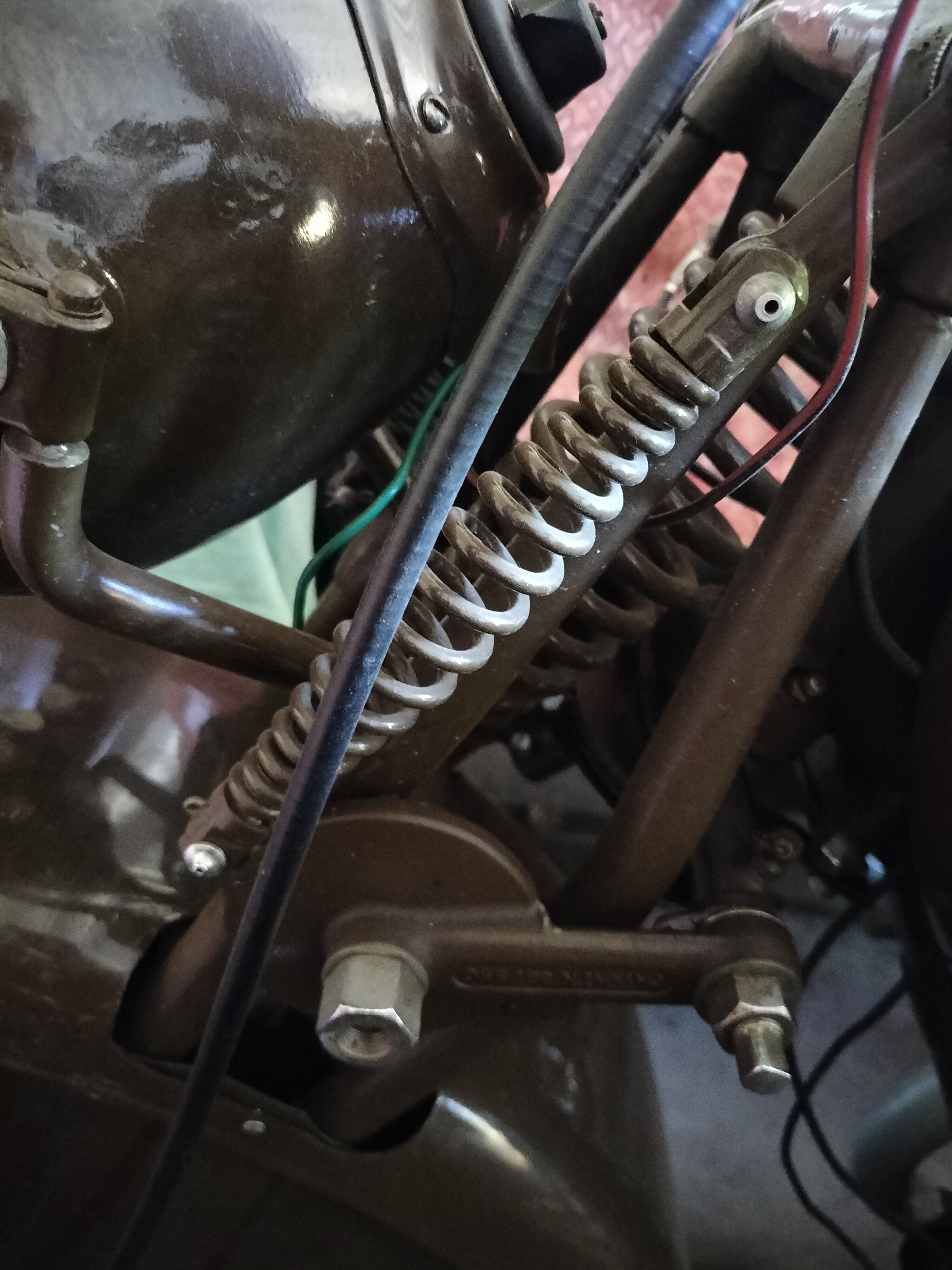
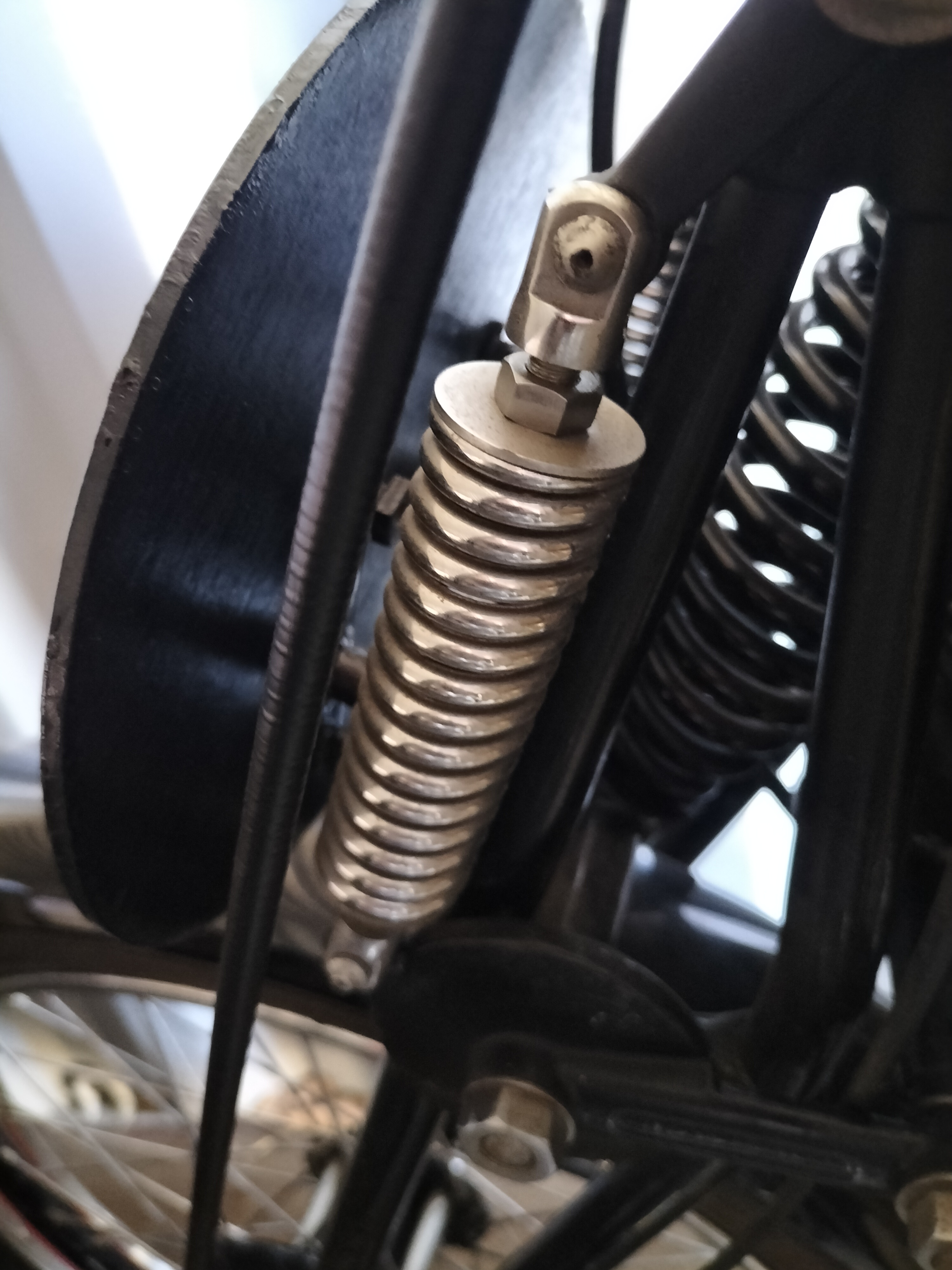
Attached are photos of both types of check springs. Which type do you have Bill?
First photo is from my WD Big 4 outfit and the second is off my 1936 racer.
- Log in to post comments
Another little detail. The…
Another little detail. The forks designed for the adjustable parallel type check springs have the spring mounts 1/8" further outboard. Otherwise the upper spring retainer disc can hit the fork tube - and wear the paint away before it starts wearing metal! So take care....the problem can be largelt overcome by adjusting the end fittings so the spring is as low as possible. Richard mentions the lack of friction dampers on the race bikes. It seems odd to employ springs as dampers..."to reduce pattering". Oscillation is usually controlled by adding dampers. Springs just change the frequency.
- Log in to post comments
A couple of shots of my…
A couple of shots of my forks. I don't have the springs fitted at the moment.
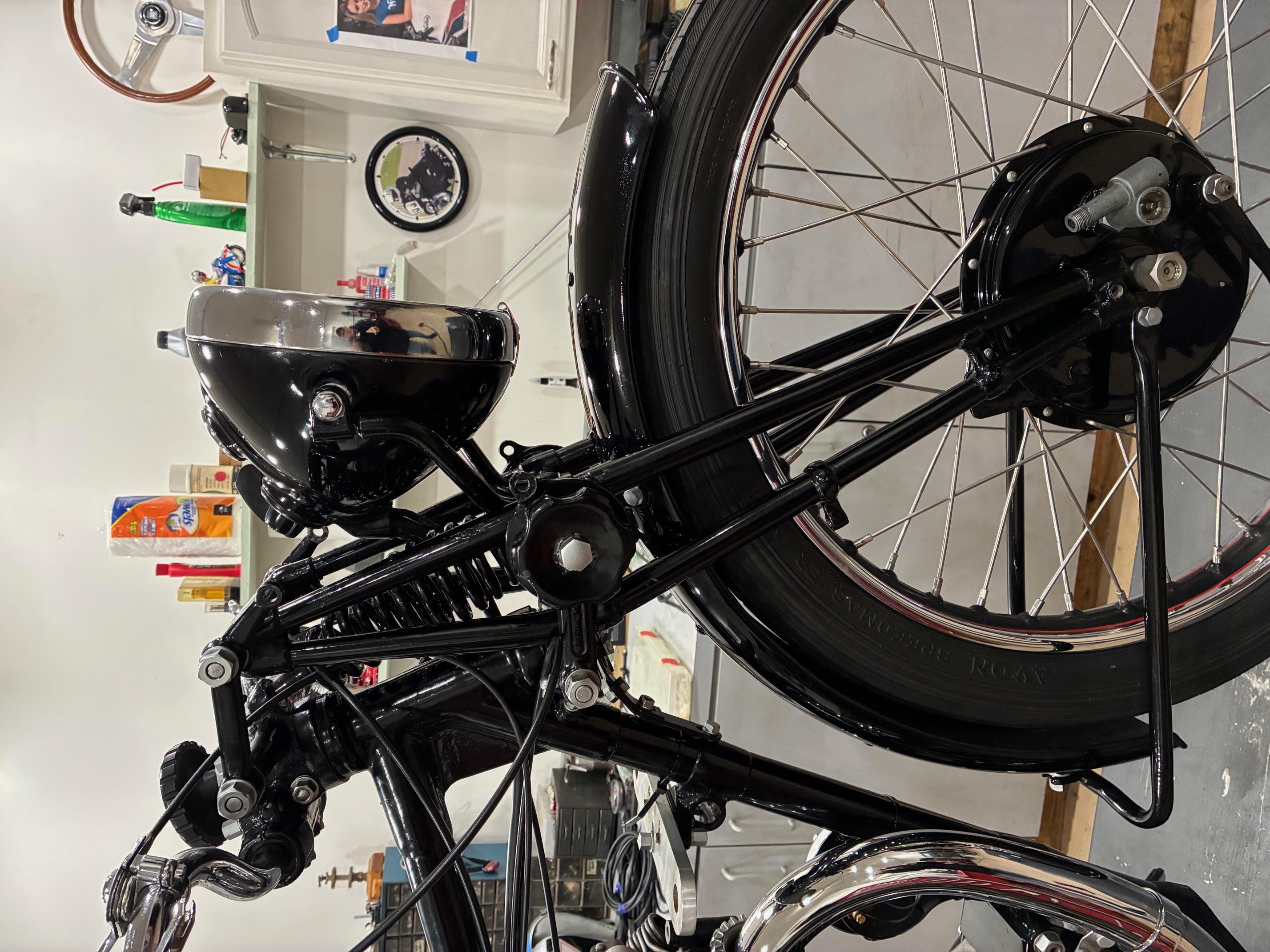
- Log in to post comments


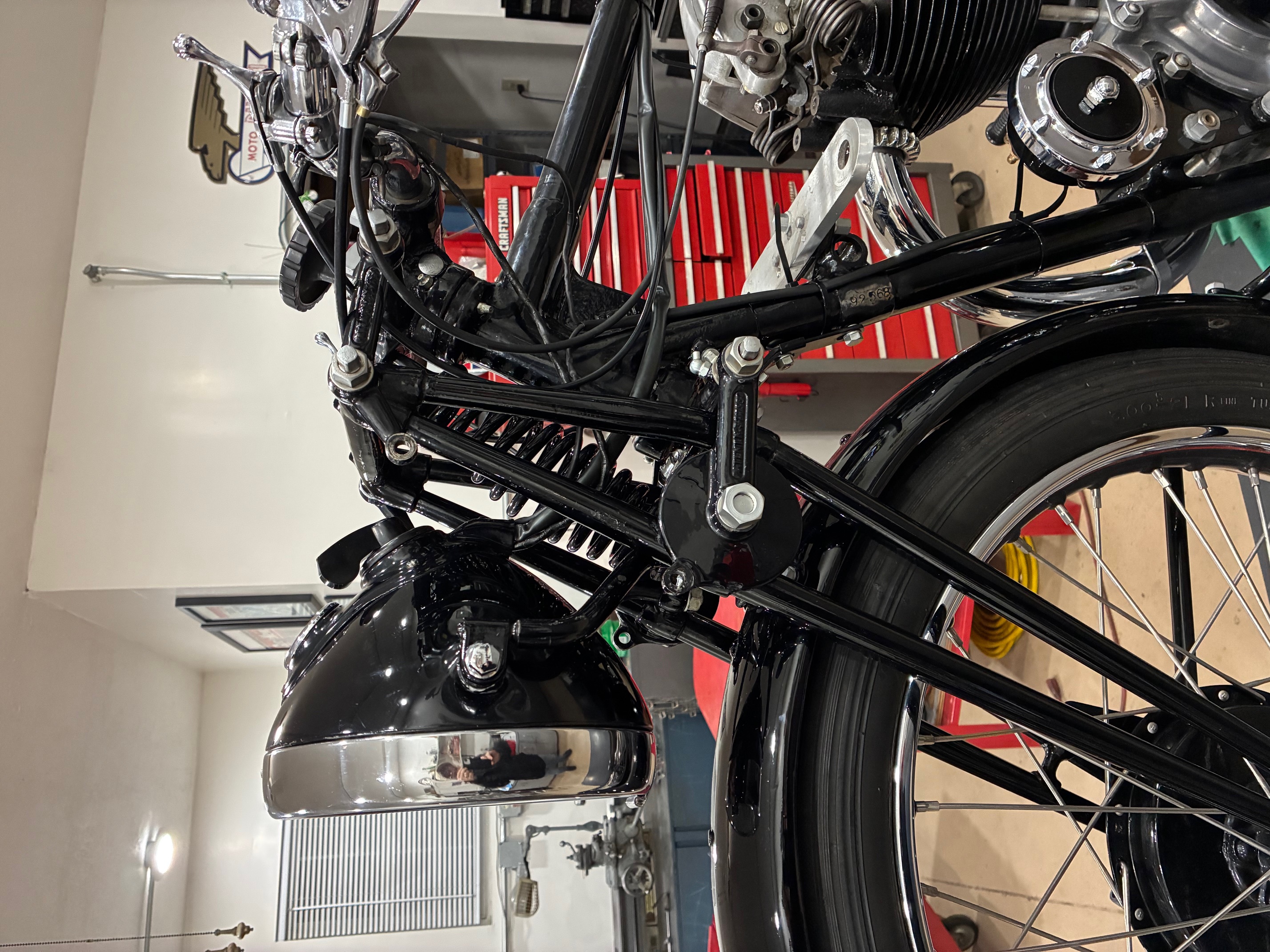
Mine are just snug so they don't rattle when as slack as they can be. Their tension increases by the same amount for every step rise in height of the fork, so (as far as I can work out) the actual starting tension is not important. But they shouldn't rattle about. (And it's not easy to assemble them at a high tension.