

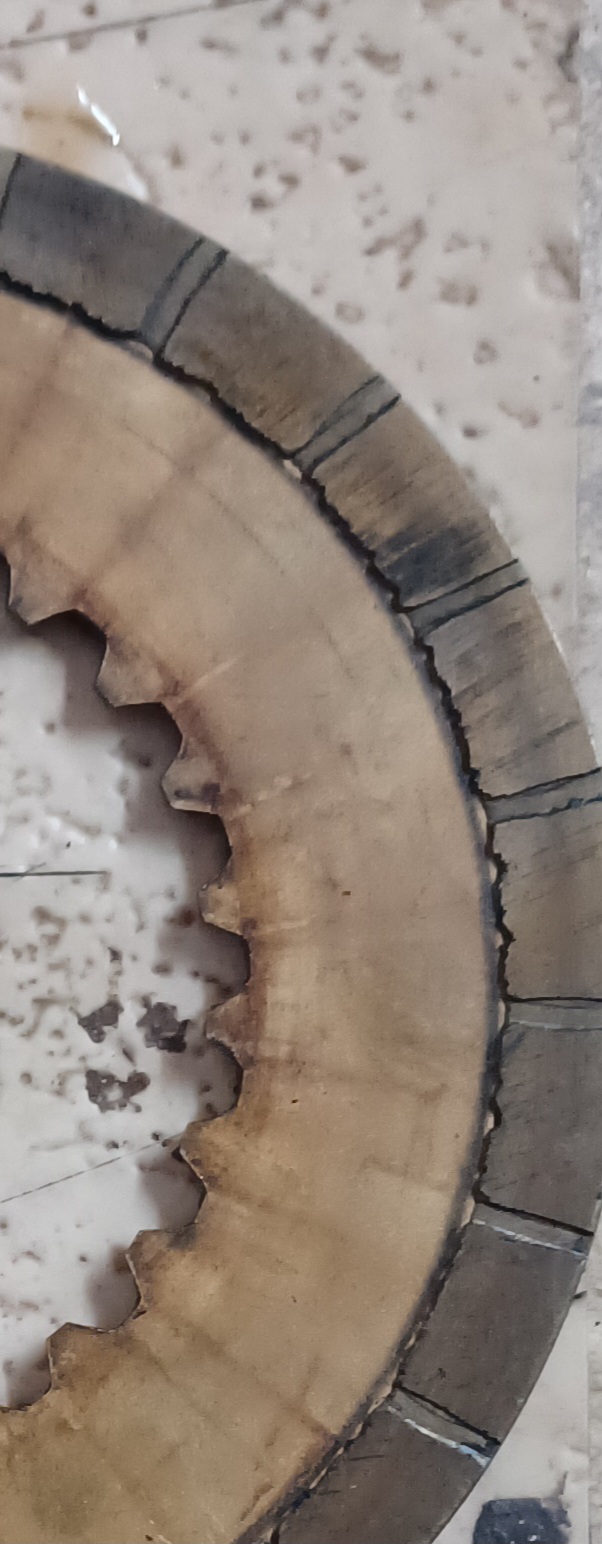
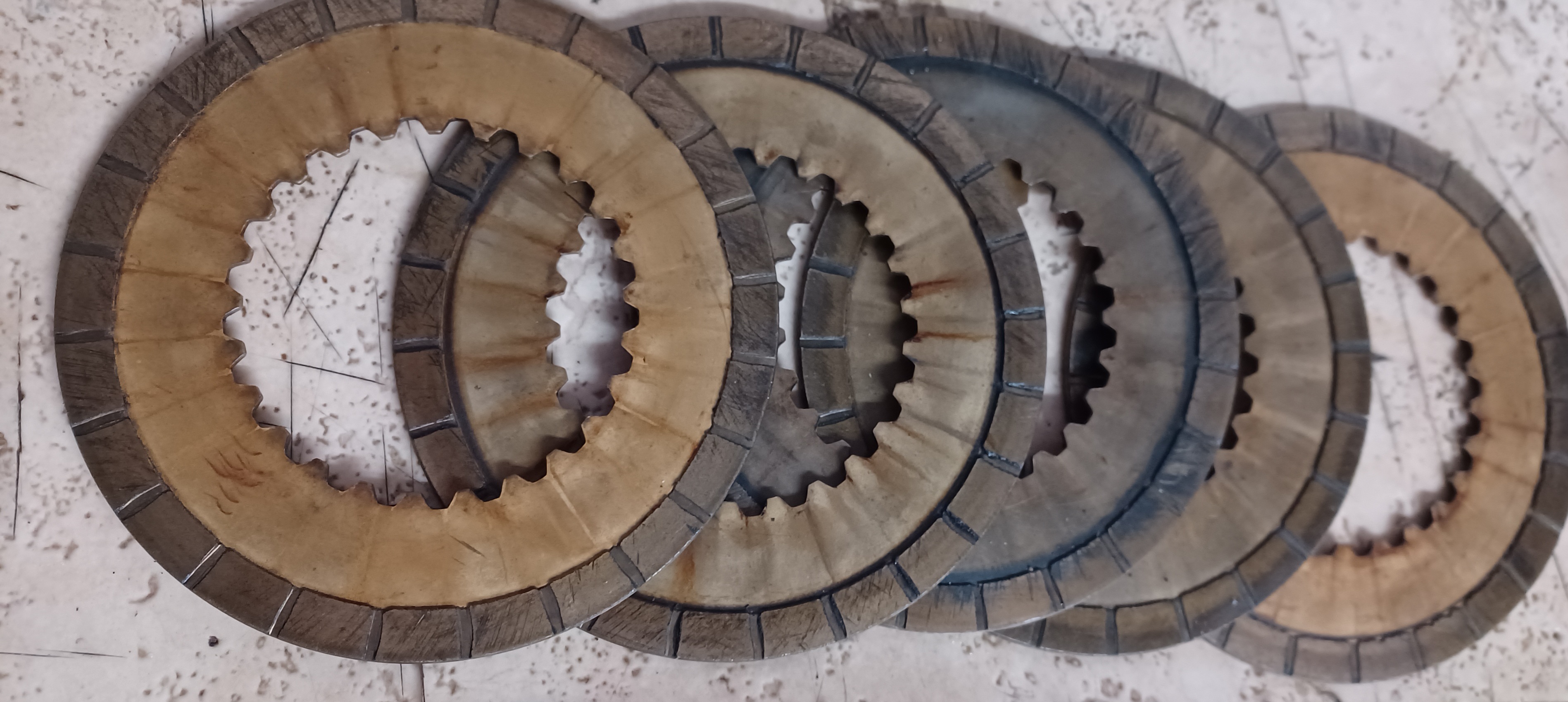
I have an early 850 that had been standing for a few years and on its the first proper run the clutch was slipping quite badly. There are 5 bronze clutch plates. The plates are 3mm thick and the friction pads 3.55mm. What is the limit of the thickness of the friction part? The edges in the pictures look a bit raggy but overall they seem to be good enough condition to me. In case I need to replace them I've had a look in the usual places and I couldn't find these bronze plates for sale. Could I replace them with ordinary 3mm plates?
Definitely no expert, but my…
- Log in to post comments
Aldi have rattle cans under…
Aldi have rattle cans under the heading brake cleaner, excellent for your purpose and it will save you having to purge your dishwasher should you be **** enough to go down that avenue.
- Log in to post comments
Thank you Paul, for your…
Thank you Paul, for your contribution. The dishwasher does sound daft (that was the word right?), I agree, but I wouldn't recommend it without a disclaimer if I didn't know from experience it works a treat. And you shouldn't be afraid to mess up your dishwasher, as it's actually made for degreasing and getting rid of the mess.
Brake cleaner will only get rid of the superficial stuff. I tried that and found the plates would sweat deeper soaked oil when hot, with the slipping returning. I won't dismiss it though, as it all depends on how saturated the friction material is.
However, new plates aren't that expensive and might put your mind to rest Joanne.
- Log in to post comments
They look to be these after…
They look to be these after-market plates:
https://www.rgmnorton.co.uk/buy/bronze-clutch-conversion-with-5-hi-torque-bronze-plates_855.htm
although well chewed up.
850s have 5x3.2mm friction plates + 4x2mm steel plates + 6mm pressure plate (next to spring).
750s have 4x3.6mm plates. So maybe the PO has been experimenting.
Wash everything with petrol and reassemble - it should work for a while.
The stack (i.e. total of all plates) height should be be between 29.5mm and 30mm , see https://atlanticgreen.com/clutchpak.htm
Then you can play around from there to get it the way you want.
If you search on here you will find lots of information on the Commando clutch and its issues, alternative plates, choice of oil etc..
- Log in to post comments
oil in primary
Dear Joanne,
wonder how much oil was in the primary case. These engines tend to wet sump when stood, as level in crankcases reaches crankshaft seal oil starts to weep past seal and fill primary case, an extra pint in there will cause your clutch to slip. solution to this is new seal on mainshaft or an oil pump service.
if stack height is around figures already mentioned, I would reassemble parts you have and see if it slips with correct oil level. If clutch lever is rather heavy and stack height is at lower level you can fit one thicker plate, my solution is to fit an original fibre plate which are thicker as I have some, or you can swap a plain plate for as thicker one if available.
regards Martin
- Log in to post comments
Those plates look like the…
Those plates look like the ones sold by RGM (out of stock on there website) Give them a good clean and degreasing. reassemble and check that the diaphragm spring is flat or slightly concave when installed. Adjust by adding thicker steel plates (3mm or 4mm, from RGM again) or by swapping a friction plate or two for the original 3.2 mm thick ones. The sintered bronze plates have a life of about a million miles, the clutch center will wear out before they do...
Expect to do the strip and clean every few thousand miles.
Use ATF or castrolite in the primary drive.
- Log in to post comments


Definitely no expert, but my two pence:
If the plates are oily or greasy, the hot program of the dishwasher will do wonders.
As long as there's (consistent) friction material height, would the thickness really matter?
Could the springs just have lost some of their power during time?
One thing you don't mention is if the plates are flat.
Good luck!
Tim