

Hello, I'm stripping the engine to clean the sludge trap before sending off the crank etc for a dynamic balance. Can anyone please confirm what I'm thinking, that the pistons are facing the wrong way, the large cut outs are on the exhaust side. The engine has ran well for 1200 miles without signs of anything amiss.
From the photo I can't see a…
- Log in to post comments
Thanks Stan, well spotted…
Thanks Stan, well spotted with the L, I didn't see that due to getting excited about it still being on standard bore but then discovering it's been sleeved. I'll turn them 180° as it's no big deal in the engine strip down.
- Log in to post comments
Thanks Alan, I'll turn them…
Thanks Alan, I'll turn them 180° to correct position.
- Log in to post comments
Reversed Pistons
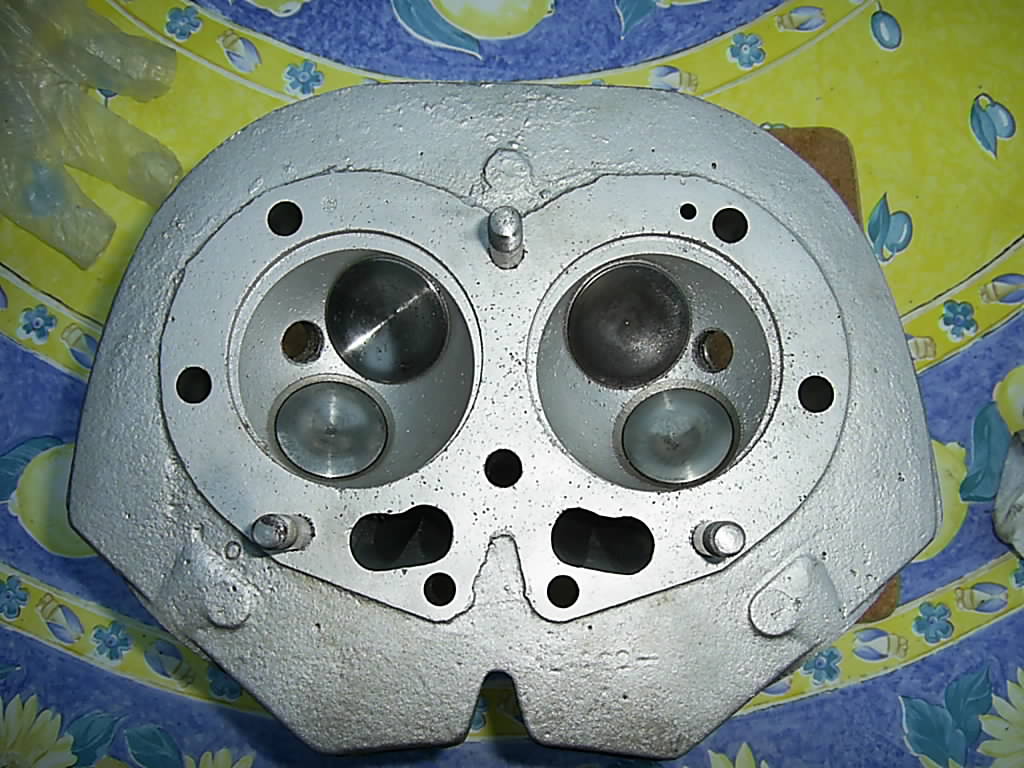
I believe that your pistons are reversed....as you suspect.
You will notice that one valve cutaway is next to the edge of the piston.
This is the exhaust side of the piston.
The other slightly larger piston cutaway has a small area of metal between it and the piston edge.
This corresponds with and should match the large crescent of metal inside the cylinder head on the inlet side.
Both being positioned at the inlet valve side of the piston and head.
See photo below.
- Log in to post comments
Thanks Philip, I'll turn…
Thanks Philip, I'll turn them 180° to correct position.
- Log in to post comments
If the have been happy where…
If the have been happy where they are and no sign of valves hitting pistons, wouldn't it be safest to leave them where they have already run in happily? You won't be disturbing circlips either. Last time I did that I tried to follow the book and fit new ones...but failed to find replacements anywhere...
- Log in to post comments
Thanks for your words of…
Thanks for your words of caution regarding the circlips David, I'll begin a search for the correct type. I'd like to turn the pistons to the correct position in case carbon build up plays a part in valve to piston interference.
- Log in to post comments
Piston Layout
Quick job to remove. Good chance to clean the carbon off and check the ring gaps too
Eddie
- Log in to post comments
Circlips
Last time I did that I tried to follow the book and fit new ones...but failed to find replacements anywhere...Said David Cooper.
I too have tripped over this issue, it turns out the issue is these old engines are IMPERIAL and most of the circlips you find are Metric!!
Now as with most of our nuts, bolts and washers once you define one dimension the other dimensions all 'line up' due to standardisation, the same happens with circlips. Once you define the 'bore' it goes into then the rest of the numbers line up. Happy hunting.
- Log in to post comments
This may help:- https://www…
This may help:-
https://www.youtube.com/watch?v=fydQTylBUjA
- Log in to post comments
Another couple of…
Another couple of observations on Ashley's YouTube. I found two different diameters for the wire type clips. The spares I had (and ones I bought on line) were different from the ones I took out.
And he advises (with the 850 where valves don't interfere with pistons) to always replace them where they cam from.
Also in respect of a, b, c and d grade pistons. In the old days before modern NC machines with feedback systems ensure exact sizes every time, factory engines were bored to a specified size at the upper end of the tolerance range. Then, as the boring machine was used, its cutters would slowly wear and not cut quite such a big hole. So the production bore size would steadily get smaller until it went outside specification and the cutter was refurbished, So 'standard bore' cylinders were graded in the works as a, b, c and d, according to the actual hole size. And pistons were selected and fitted to suit. So there might be several sizes of 'standard' pistons. (I'm fairly sure BL cars had 4 sizes: a,b,c,d)
On re-boring, the machine shop would always aim for the correct size for each setup, since they wouldn't be mass producing over size bores. So oversize pistons each came in only the one size. And of course if we sleeve back, the same applies (which is what Ashley says).
- Log in to post comments
Thanks David, I've found out…
Thanks David, I've found out that the pistons are Hepolite and circlips are shown as available but it turns out, after removing the crank, that piston orientation may have been the least of my worries.
- Log in to post comments
Sorry Terry, I wasn't being…
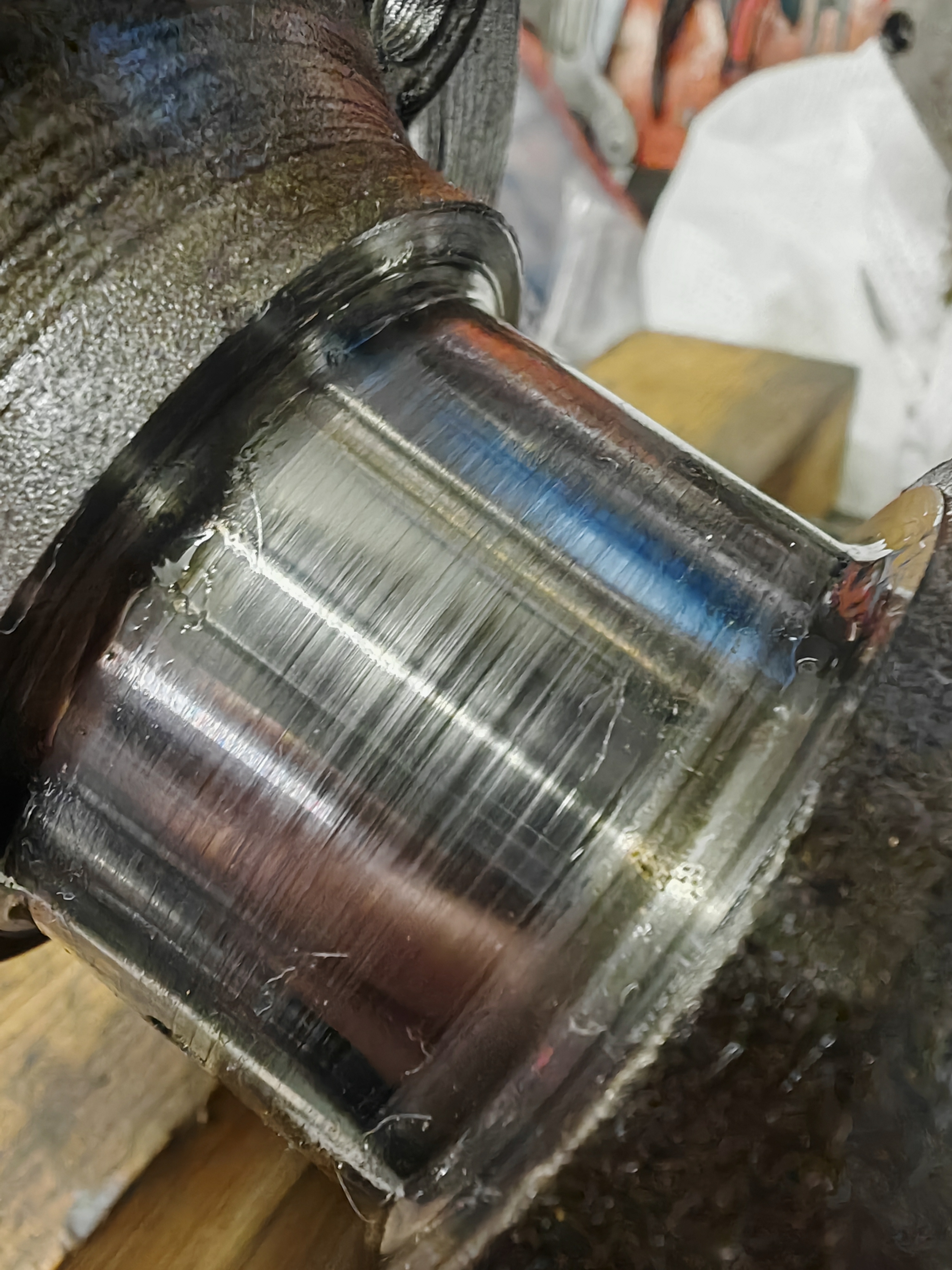
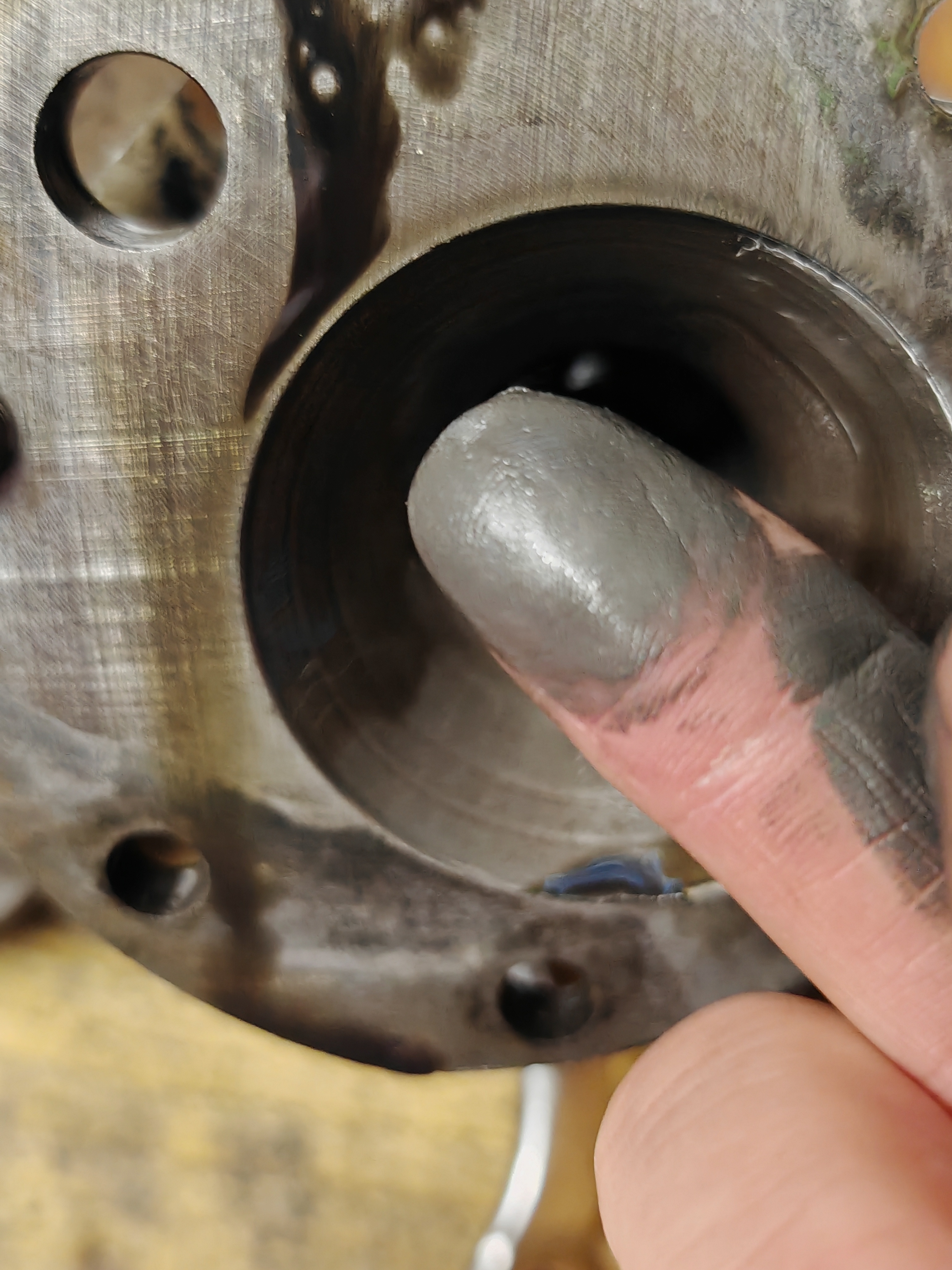
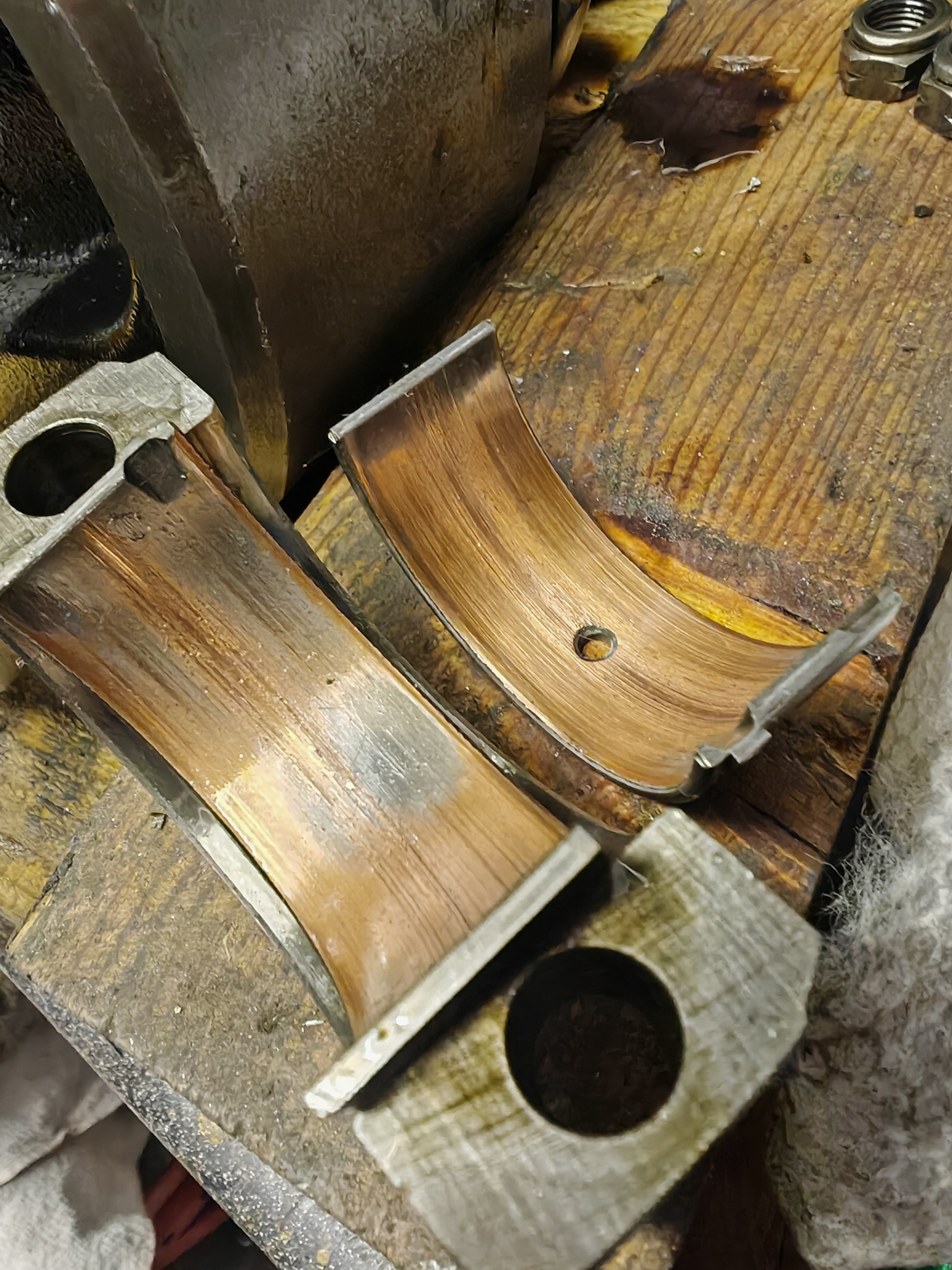
Sorry Terry, I wasn't being a drama queen lol. I was mid way through crank removal. Since getting the bike after being told it had a recent engine rebuild, and looking as thought it had due to fresh clean gaskets poking out, one of the first things I fitted was an oil pressure 'worry' light which occasionally flickered at low and high rpm. I pulled the timing cover to renew the pump to cover seal and cover to crank end feed. The end feed seal was facing the wrong way. I also found the gearbox sprocket was the too narrow for the chain and one rocker had 1/8" clearance and the carb needles and main jets were wrong lengths and sizes. All this blew any confidence in the claimed rebuild and I had a nagging mind to check and clean out the sludge trap. I found a nest of horrors, although mostly empty of sludge, what there was feels gritty. The std size big end shells and journals are knackered. There's a lot of fine vertical scratches on the pistons. I found what feels like shot last sand in the bottom of the oil tank. So that's everything needing renewal including the oil pump and lines. The rockers, shafts, valves cam and it's followers have escaped damage and the barrel might just need a hone.
I've now got to attack what's left of the crank pinion wood ruff key with a dremel slitting disc after trying the usual punch and tip method. I'll try and add a couple of photos
- Log in to post comments
Further issues
Hi Adam, sorry to hear about your further issues with the Commando, media blasting is a great way of cleaning components but a lot of care must be taken both before and after, I personally would not blast an oil tank, to difficult to clean properly beforehand. I think you should add main bearings to your list of new parts. Best of luck (think you're owed some), Terry.
- Log in to post comments
Blasting grit always gets…
Blasting grit always gets into an oil reservoir and you never get it all cleaned out.
That's my point of view anyway.
- Log in to post comments
Every time i hear the term …
Every time i hear the term 'Just restored' i inwardly groan. It very often means that the thing has been thrown together using whatever was available, usually by incompetant people.
Golden rule 'Just restored' means walk away...Fast!
- Log in to post comments


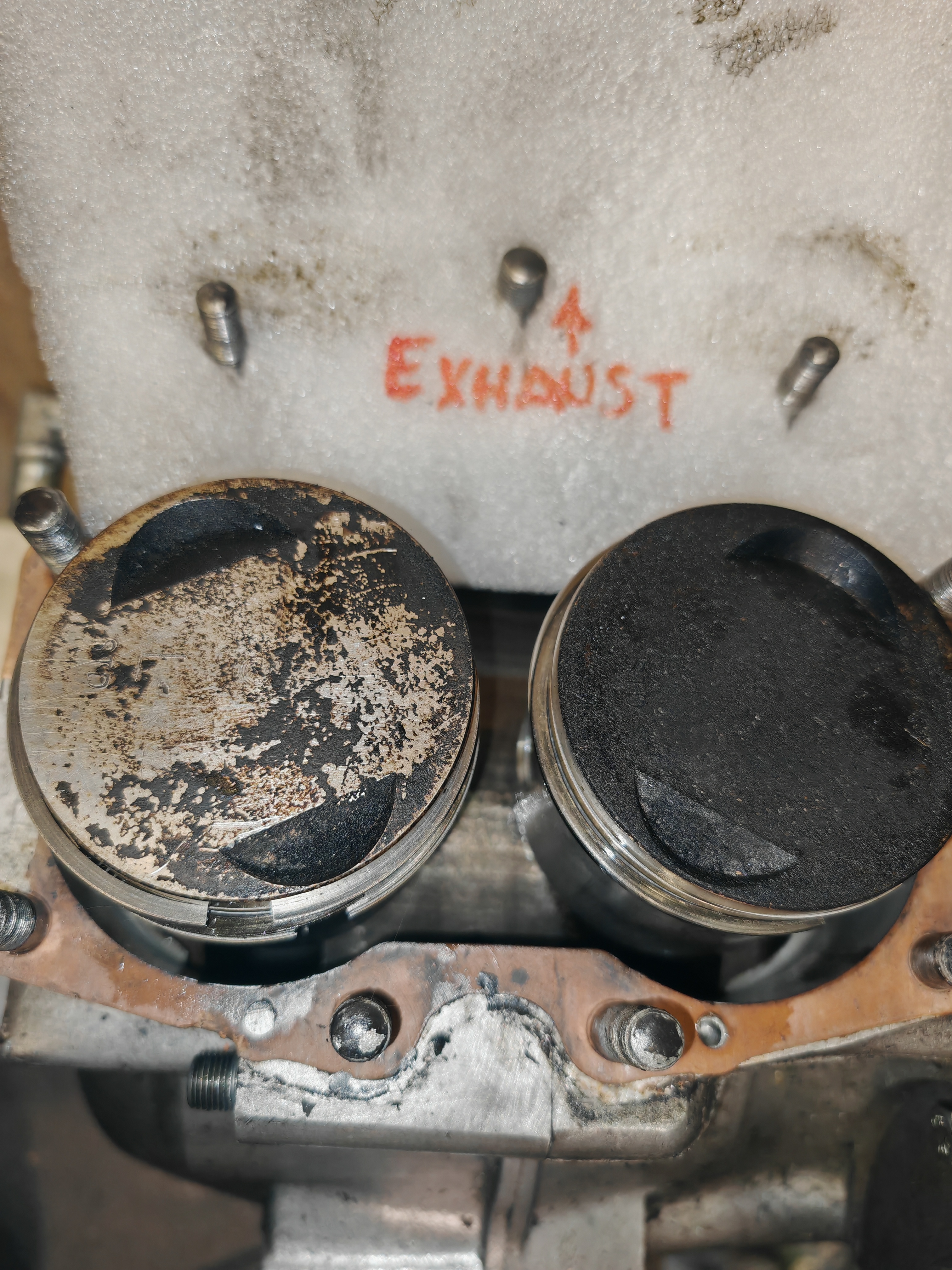
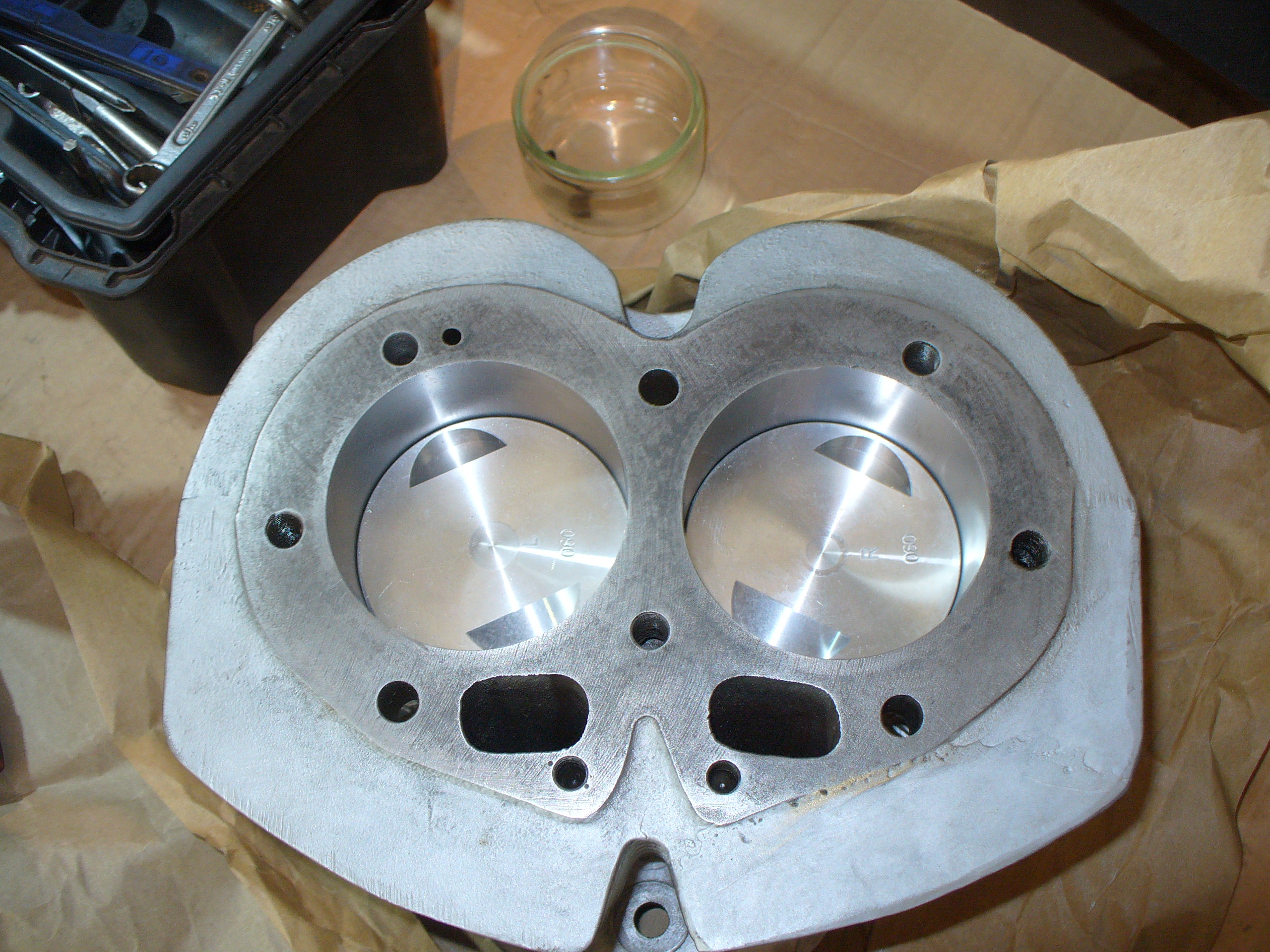
From the photo I can't see a lot of difference in the cutouts to be honest. But yes, the inlet cutouts are usually deeper and wider and the exhaust cutout is usually closer to the edge of the piston.
Still, it doesn't look like anything's been hitting, so you could leave it as is. Maybe check the clearance with some plasticine while it's apart, and try the pistons the other way round to see which is best.
What I do see is a mark that looks like an L on the left-hand piston. And it looks a lot like the JCC pistons here:https://www.classicbritishspares.com/products/norton-commando-750-pistons
Original Hepolite 750 pistons were stamped with EX next to the exhaust cutout.