




Alan Osborn. Roadholder No. 176 - Jul/Aug 1994
A comparison of the early and late versions of the components
that make the red light come on when your battery isn't charging
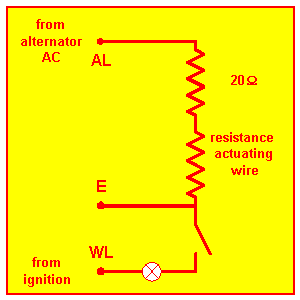
Figure 1
|
The earlier type of warning light unit, with the designation 3AW, is an aluminium can that hangs on a spring under the Commando seat. |
When you examine the way this unit is used on the bike you see that the circuit, shown in Figure 1, is a little naughty, in that it takes power direcly from the alternator to earth and in fact across one of the diodes in the rectifier, thus giving it a very interesting waveform. Should that particular diode in the rectifier fail and go open circuit, then you not only lose half the output from the alternator, but you also burn out the 3AW. The burned out 3AW can then short out and reduce the alternator output, the fault remaining even after you replace the rectifier. Being electromechanical, these units are delicate with regard to vibration as well: it's a wonder they last as long as they do. I believe they were only used on the Mk.l and Mk.ll 850s.
When we come to the Mk.lll with the high output single phase (18OW) alternator, the 3AW would have burned out, so Norton started again and came up with the black 'square' assimilator, almost a proper piece of electronics. This unit certainly seems to be reliable with regard to vibration and water ingress.
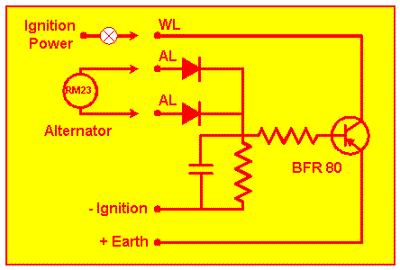
Figure 2
|
Figure 2 shows how it works. The voltage applied from the ignition terminal biases the transistor on, and the warning lamp lights. |


